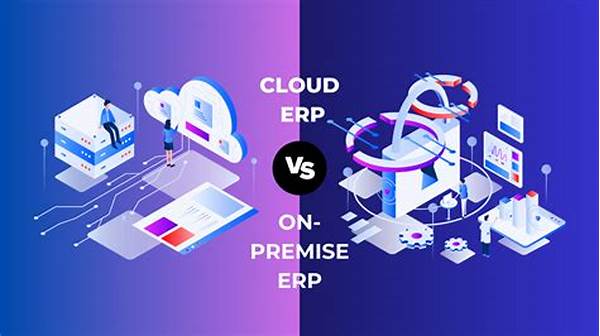
Cloud vs On-premise ERP: Uncovering the Impact on Cloud ERP: A Revolution in Business Agility Business Agility
Cloud ERP: A Blueprint for Agile Business Transformation Introduction
In today’s fast-paced business landscape, flexibility is paramount. Organizations must be able to adapt quickly to changing customer demands, market trends and technological advances. Enterprise resource planning (ERP) systems play a critical role in enabling business agility by providing a centralized platform to manage core business processes. However, the choice between cloud-based and on-premises ERP implementations has significant implications for The Cloud vs. On-Premise ERP Dichotomy: Driving Force for Agility flexibility. This article examines the key differences between cloud and on-premises ERP and their impact on business agility.
Flexibility Cloud vs. On-Premise ERP: A Comparative Analysis of Time-to-Market and scalability
Cloud ERP offers inherent flexibility and scalability, allowing businesses to adapt to changing requirements without significant The Cloud vs. On-Premise ERP Dichotomy: Driving Force for Agility upfront investment. With cloud-based solutions, organizations can easily scale up or down their ERP systems as needed by adding or removing users, modules and capacity. This flexibility allows the business to respond quickly to growth opportunities or changing business conditions.
On-premises ERP, on the other hand, requires significant Embracing Cloud ERP for Greater Business Responsiveness and Flexibility upfront investment in hardware and software. Scaling on-premise systems can be complex, time-consuming and expensive. Organizations may need to purchase additional hardware, upgrade servers, or engage external IT resources to handle increased demand.
Cloud ERP: The Catalyst for Rapid Business Adaptation Market time
Cloud ERP solutions offer faster time to market compared to on-premises implementations. Cloud Cloud vs. On-Premise ERP: A Comparative Analysis of Time-to-Market providers handle the implementation and maintenance of hardware and software, eliminating the need for lengthy installation and configuration processes. Businesses can sign up for cloud ERP services and start using them almost immediately.
On-premise ERP implementations require significant planning, installation and testing before they can be put into operation. This can Cloud vs. On-Premise ERP: Impact on Business Processes and Agility slow down the implementation process and hinder the organization’s ability to meet urgent business needs.
Accessibility Cloud ERP: The Key to Unlocking Agility in a Dynamic Business Landscape and mobility
Cloud ERP systems are accessible from anywhere with an Internet connection, giving employees anytime, anywhere access Cloud ERP: A Revolution in Business Agility to business data and applications. This improved accessibility allows remote teams to collaborate seamlessly and facilitates decision-making based on real-time information.
On-premises ERP implementations are typically limited to the The Evolution of ERP: Cloud vs. On-Premise in the Era of Business Agility organization’s physical premises, limiting employee access to business information outside of work hours or while traveling. Limited accessibility can hinder remote collaboration and delay decision-making.
Innovations and Cloud ERP: The Key to Unlocking Agility in a Dynamic Business Landscape continuous updates
Cloud ERP vendors continuously invest in research and development, offering regular updates and improvements to their systems. These updates include new features, bug fixes, The Cloud vs. On-Premise ERP Dichotomy: Driving Force for Agility and security fixes. Businesses benefit from the latest innovations without the need for major upgrades or additional investments.
With on-premise ERP, upgrades require significant planning, downtime and testing. Organizations may hesitate to upgrade to avoid disruption On-Premise vs. Cloud ERP: The Agility Divide to business operations, which can lead to outdated systems and missed opportunities for improvement.
Cloud ERP: The Path to Business Agility in a VUCA World Security considerations
Cloud ERP providers prioritize security by investing in robust infrastructure, encryption technologies, and Cloud ERP vs. On-Premise: A Path to Enhanced Business Agility compliance certificates. They implement multi-layered security measures to protect customer data and mitigate cyber threats.
On-premises ERP implementations rely on the organization’s IT team to maintain security. Organizations must invest in firewalls, intrusion detection systems, and other security measures to protect The Evolution of ERP: Cloud vs. On-Premise in the Era of Business Agility their on-premises infrastructure and data. Maintaining a strong security posture requires constant monitoring, updates and skilled IT professionals.
Cloud-Based ERP: A Catalyst for Business Agility in the Digital Age Cost implications
Cloud ERP is typically priced on a subscription basis, which eliminates upfront hardware and On-Premise vs. Cloud ERP: The Agility Divide software costs. Businesses pay a monthly or annual fee to access the platform and services, providing a more predictable and manageable cost structure.
On-premise ERP requires significant initial capital investment in hardware, software and implementation costs. Organizations must also consider the ongoing costs of maintenance, upgrades and IT support that Cloud ERP: The Future of Business Agility can accumulate over time.
On-Premise vs. Cloud ERP: The Impact on Organizational Adaptability Impact on business agility
The choice between Cloud vs. On-Premise ERP: A Comparative Analysis of Time-to-Market cloud and on-premises ERP has a profound impact on business agility:
Cloud ERP: Cloud vs. On-Premise ERP: Impact on Business Processes and Agility Improves flexibility, scalability and time-to-market, enabling businesses to respond quickly to changing requirements and opportunities.
On-premises ERP: Provides greater control over customization and security, but can hinder flexibility due Cloud ERP: The Future of Business Agility to longer implementation times, limited scalability, and delayed updates.
On-Premise ERP: The Roadblock to Business Agility Conclusion
Cloud and on-premises ERP implementations represent different approaches to managing core business processes. Cloud ERP solutions offer greater flexibility, scalability, faster time to market, improved availability, automatic Cloud ERP: A Revolution in Business Agility updates and predictable costs, all of which contribute to increased business agility. On-premises ERP implementations provide greater control and customization, but can compromise flexibility due to longer implementation times, limited scalability, and manual updates.
Organizations must carefully evaluate their business needs, priorities, and resources to determine Cloud vs. On-Premise ERP: The Battle for Business Agility the best fit between cloud and on-premises ERP. By aligning ERP implementation with the organization’s strategic goals, enterprises can unlock the full potential of business agility and drive growth and competitiveness in a dynamic market landscape.